
Just a short drive southwest of Batesville, the quiet community of Jamestown offers visitors a fascinating glimpse into Arkansas history paired with some of the region’s best outdoor recreation. Tucked into the hills of Independence County, Jamestown may be small today, but its story is deeply woven into the heritage of the Arkansas Ozark Gateway Region.
Long before modern highways connected the region, Jamestown was once one of the area’s busiest rural communities. Settlement near Jamestown Creek began as early as 1844, and the town eventually became known as Jamestown in 1881 after previously being called “Mudtown” and “Alderbrook.” Historians believe the name either honored the famous Jamestown settlement in Virginia or recognized local land donor and promoter Daniel James.
By the turn of the twentieth century, Jamestown had grown into a thriving agricultural and business center for the surrounding countryside. The community featured general stores, blacksmith shops, a flour mill, cotton gin, and even a local college. Farmers and families from across the region traveled to Jamestown for supplies, education, and commerce, making it one of the most active communities in Independence County during its peak years.
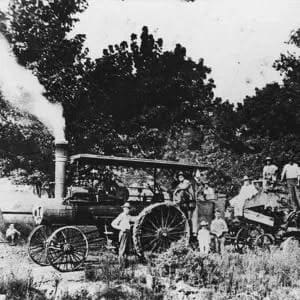
That prosperity changed dramatically on August 10, 1921, when sparks from a passing threshing machine ignited a devastating fire that swept through much of the business district and several homes. The destruction permanently altered the town’s future, and over time many residents relocated to nearby communities, including Batesville. Though Jamestown never regained its former size, its history remains an important chapter in the story of Independence County.
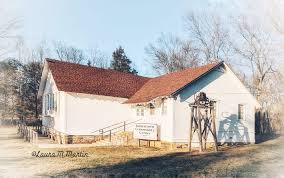
One of the community’s most significant surviving landmarks is the historic Jamestown School. Constructed in 1926, the Craftsman-style wood-frame building served local students until 1949 and still stands as a reminder of the area’s educational heritage. Listed on the National Register of Historic Places in 1992, the school remains one of the few visible connections to Jamestown’s once-thriving past.
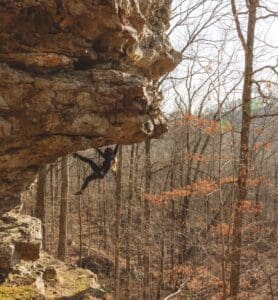
Today, many travelers discover Jamestown for an entirely different reason — outdoor adventure. Located only about twenty minutes from Batesville, Jamestown Crag has become one of Arkansas’s premier rock-climbing destinations owned and maintained by the rock-climbing nature loving group, The Nomads. The privately owned 50-acre property features towering Atoka sandstone bluffs and more than 100 bolted sport climbing routes that attract climbers from across the South and Midwest every year for The King of the Crag event. In addition to climbing, visitors enjoy hiking, photography, and searching for the beautiful Bailey’s Pour Off Waterfall.
A visit to Jamestown also pairs perfectly with time spent in nearby Batesville, Arkansas’s oldest and one of the most vibrant historic cities. Situated along the White River, Batesville offers visitors a lively downtown filled with local restaurants, boutiques, historic architecture, live music, and community events throughout the year. The city serves as a convenient home base for exploring the natural beauty and hidden history scattered throughout Independence County.
Together, Batesville and Jamestown showcase two sides of the Ozark Gateway Region — one a quaint, historical river city filled with culture and history, the other a quiet rural community where traces of the past meet rugged outdoor adventure. So, plan a trip to explore historic landmarks, climb sandstone bluffs, or simply take the scenic backroads through Independence County, this corner of Arkansas offers visitors a memorable mix of history, nature, and authentic Ozark character.