
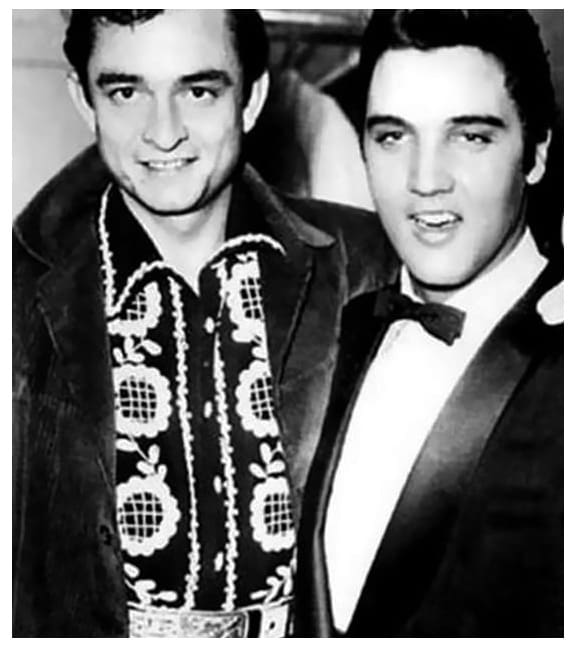
When Rock ’n’ Roll Rolled Through Northeast Arkansas
Long before the bright lights of Memphis or Nashville defined their careers, a group of young musicians—Elvis Presley, Johnny Cash, Jerry Lee Lewis, Carl Perkins, and others—cut their teeth on the small-town stages of Northeast Arkansas. In the 1950s, this corner of the state was alive with roadhouses, school gyms, and makeshift stages that echoed with the earliest sounds of rock ’n’ roll.
Elvis in Newport & Swifton
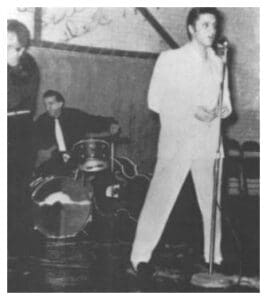 Before he was a household name, Elvis Presley performed in Newport, often introduced by local promoter and radio personality “Sunshine” Sonny Payne. Payne played Elvis’s early singles on radio station KNBY 1280, helping launch his sound across the Ozarks.
In Swifton, at the old Silver Moon Club, Elvis shared the stage with future legends like Cash and Perkins. Locals remembered him as polite, quiet, and surprisingly shy—until he stepped up to the microphone. Once the music started, the crowd went wild, teens lined the edge of the stage, and the little dance hall shook like it was trying to take off.
Johnny Cash’s Arkansas Homecoming
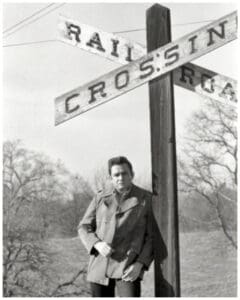 Johnny Cash, raised just south of there in Dyess, played countless shows around Newport, Walnut Ridge, and Pocahontas in his early Sun Records days. He once said these audiences felt like playing for family—farmers still in their work clothes, young couples on date night, and servicemen home on leave. His song list mixed gospel with the early boom-chicka-boom sound that soon took over America.
Walnut Ridge: A Crossroads of Legends
Walnut Ridge became a hot spot for touring musicians, thanks to the nearby airfield at the former Army Air Base. The town hosted a parade of rockabilly stars who passed through on their way to St. Louis, Jonesboro, or Memphis. Years later, The Beatles famously landed there in 1964, but long before that, the town was already welcoming rising stars with guitars slung over their shoulders.
A Region That Shaped a Movement
From the honky-tonks of Swifton to the packed school auditoriums of Newport, these Northeast Arkansas towns played a quiet but important role in creating American music history. Crowds danced, sang, and sometimes stood in stunned silence as a new sound—raw, loud, and full of heart—took shape right in front of them.
For the people who were there, it wasn’t history yet.
It was just Saturday night.
For the rest of us, it became the birthplace of a movement.